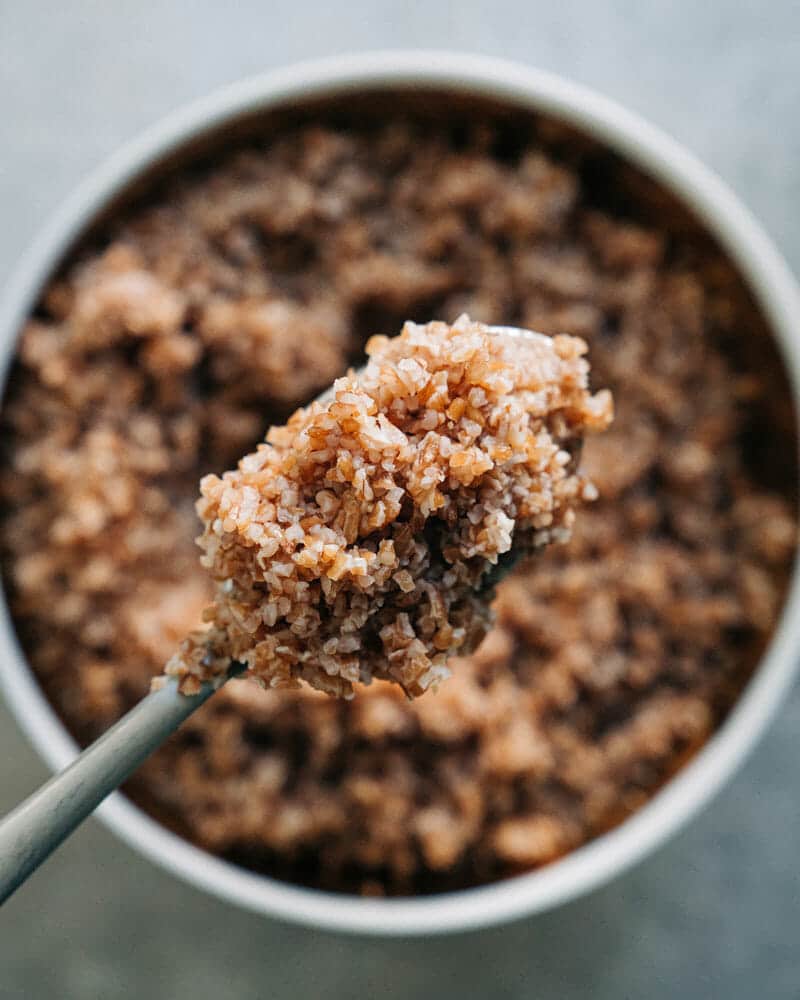
Coarse and extra-coarse bulgur are favored whole grain selections that offer a wholesome and adaptable foundation for numerous recipes. Sourced from cracked wheat kernels, bulgur is a cornerstone in Middle Eastern cooking and is valued for its earthy taste and chewy consistency. The method for preparing coarse and extra-coarse bulgur is uncomplicated but demands attention to detail to achieve ideal doneness.
To prepare coarse or extra-coarse bulgur, start by measuring 1 cup of the grain and placing it into a saucepan. Add 2 ¼ cups of water to the saucepan. This ratio guarantees that the bulgur absorbs enough liquid to become soft without turning mushy. Heat the water to a boil over medium-high flame. Once it reaches a boil, give the mixture a good stir to prevent the grains from adhering to the bottom, then cover the saucepan with a snug lid.
Lower the heat to a simmer and let the bulgur cook. The cooking duration may range from 15 to 25 minutes, depending on the specific variety of bulgur and individual preferences for firmness. During the cooking phase, it’s essential to stir from time to time to promote even cooking and prevent sticking.
When the bulgur achieves the preferred softness, take the saucepan off the heat. If there is any leftover water, just drain it away. The cooked bulgur can be fluffed with a fork to separate the grains and enrich its texture.
Coarse and extra-coarse bulgur can be incorporated into a multitude of dishes. It serves as a wonderful foundation for salads, like tabbouleh, or as a satisfying side dish. It can also be added to soups, stews, and pilafs, contributing both nutrition and texture. Packed with fiber, protein, and vital nutrients, bulgur is a nutritious addition to any meal, providing a gratifying and wholesome substitute for refined grains.