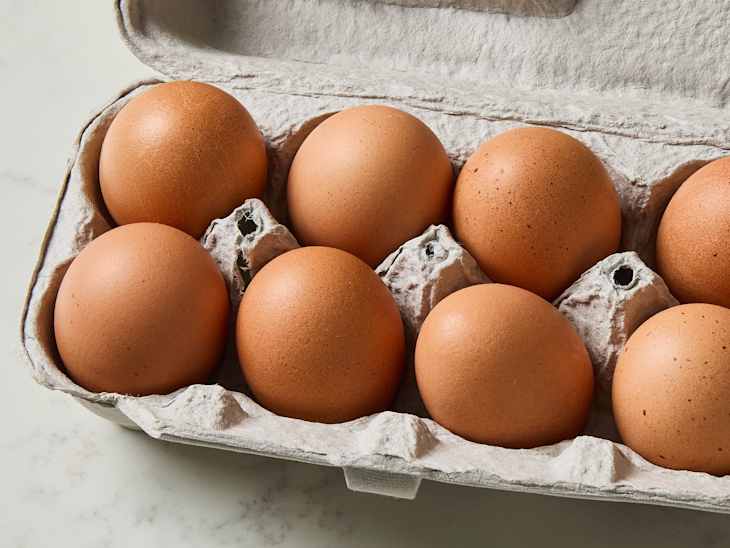
If there’s one item we go through a lot of in our household, it’s eggs. Between our morning scrambles and our weekend baking experiments, my husband and I easily use up two or more dozen eggs in a week. That sets us back about $14 to $16, depending on whether we buy them from a local farm or supermarket.
Seems expensive? That’s what pasture-raised eggs cost where I live these days. We ditched the conventional eggs for pasture-raised about a year ago, and there’s no doubt in my mind they’re well-worth the premium.
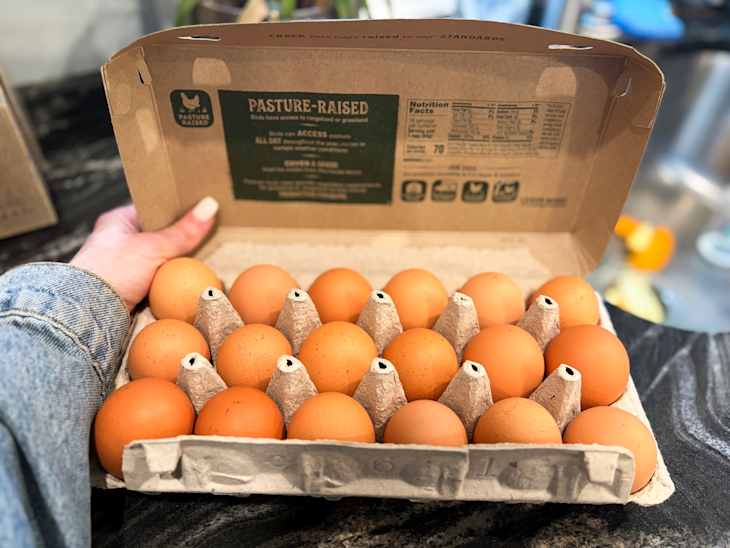
What You Should Know About Pasture-Raised Eggs
As the name suggests, pasture-raised eggs come from hens that spend a majority of their lives on outdoor pastures that are covered with living plants. They have year-round access to the pasture (weather and safety permitting, of course), with at least about 108 square feet of space per hen.
“This keeps hens healthy, fertilizes the soil, and produces the highest-quality eggs through their diet — which consists of roughly 20% fresh grass,” said Steve Hall, founder and operator of the regenerative poultry farm Nallie Pastures.
“Cage-free and free-range labels at the store come from stationary warehouse and barn buildings with maybe a small outdoor yard,” added Hall. Because the grass in these yards is typically eaten quickly, the hens don’t have as nutritious of a diet, which translates to lower-quality eggs.
Why I Only Buy Pasture-Raised Eggs
So, why are pasture-raised eggs better? As it turns out, there are several noteworthy advantages.
Research has repeatedly proven that pasture-raised eggs are more nutrient-dense — and by a long shot. In fact, one study out of Penn State University found that pasture-raised eggs contain significantly more vitamins and essential nutrients compared to hens raised in commercial cages on a grain diet:
- 7 times more beta-carotene, an antioxidant that your body uses to make vitamin A
- 4 times more vitamin E, which protects your cells from free radical damage while keeping the immune system strong
- 3 times more vitamin D, which helps your body absorb calcium for strong bones
- 3 times more omega-3 fatty acids, which have anti-inflammatory effects and can help support heart, brain, and eye health
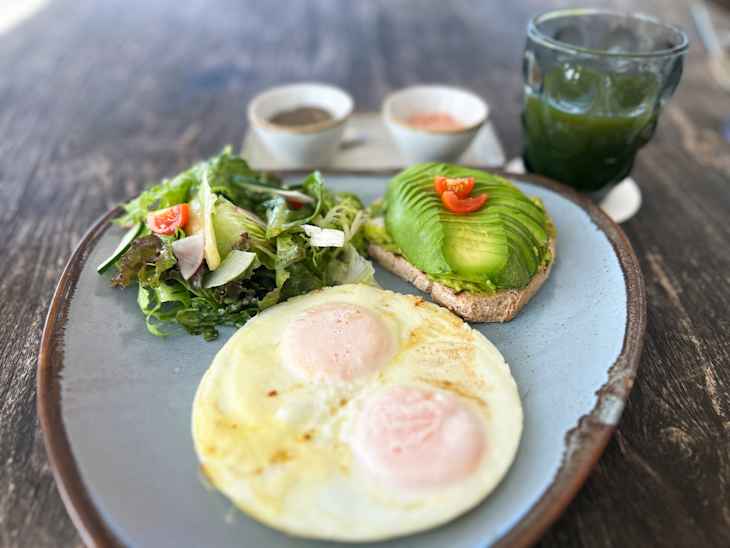
Not only that, but Hall notes that pasture-raised eggs often taste better, too, thanks to hens’ more diverse diet from foraging for grasses, seeds, and protein-rich insects. In my experience, they don’t necessarily taste different — the egg flavor is just richer and more pronounced overall. Texture-wise, the whites are more dense and the yolks are creamier and deeper in color.
Did I mention that pasture-raised animal products are also better for the environment? When hens can roam freely, they naturally help to control weeds and pests while fertilizing the soil, reducing the need for chemical pesticides, herbicides, and fertilizers. Producing pasture-raised eggs generally involves more regenerative practices, according to a study in Poultry Science. There’s also less reliance on heavy machinery for feeding, cleaning, and waste management, which results in lower greenhouse gas emissions, too.
Where to Shop for Pasture-Raised Eggs
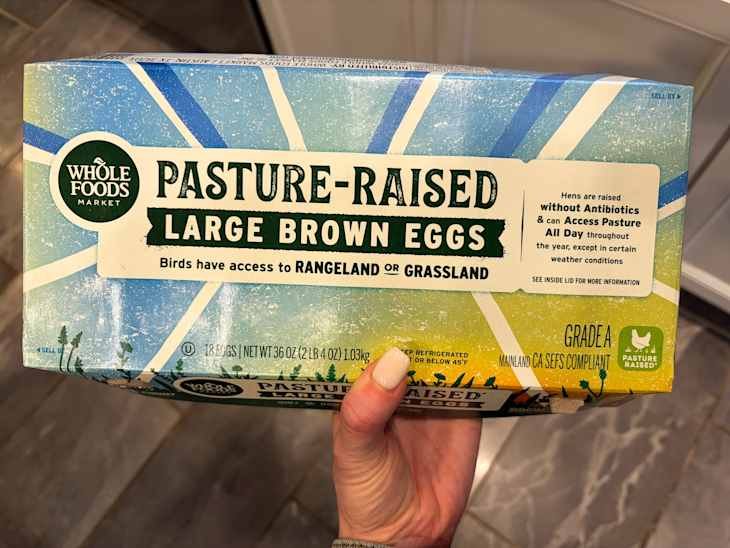
I’ve been able to find pasture-raised eggs at most grocery retailers, including Wegmans, Whole Foods Market, Trader Joe’s, Stop & Shop, and Target. That said, when I can, I like to support local farms and buy eggs locally. Farmers markets are a great place to find local pasture-raised eggs, or you can search your zip code in the Get Real Chicken directory to find a farm near you.
“Shoppers looking for the best-quality eggs should search for local farms that practice regenerative agriculture,” said Hall. Whenever possible, Hall suggests visiting the farm in person to check out their practices.
“Mobile chicken coops and daily movements should be easy to see,” he explained. “Inspect what you expect. Farmers who are doing it right will be very excited to show you how they do things.”
Do you buy pasture-raised eggs? Tell us about it in the comments.
The Weekly Checkout
Sign up for The Weekly Checkout to get the most up-to-date grocery news, tips, and highlights.