# Creamy Pasta Primavera: A Vibrant One-Pan Dish
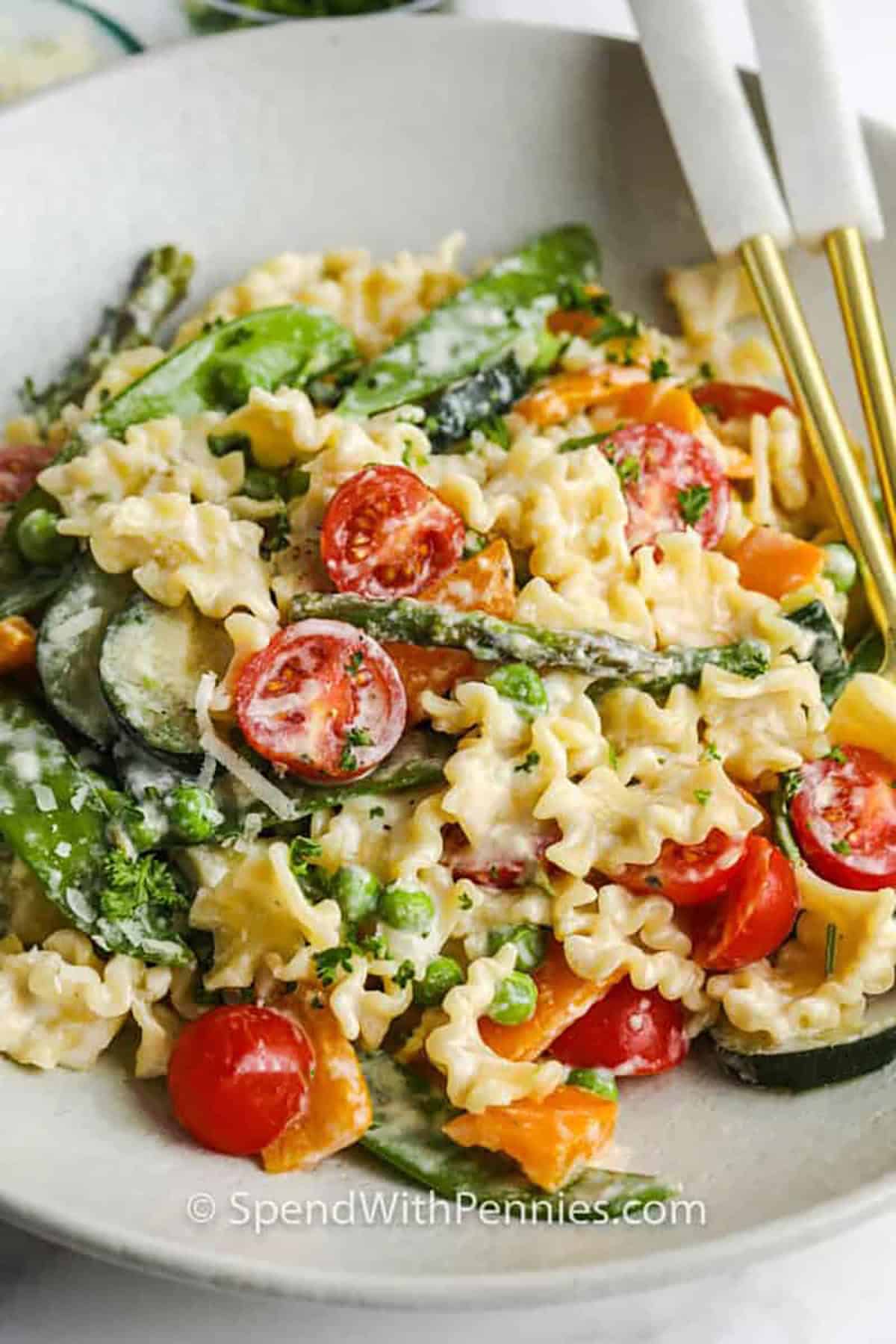
Creamy pasta primavera is an enticing meal that combines the lively tastes of spring vegetables with a luxurious Parmesan cream sauce. This one-pan dish is not only pleasing to the eye but also an excellent way to incorporate fresh produce while minimizing cleanup.
## What is Pasta Primavera?
Pasta primavera means “spring pasta,” and it generally includes a mix of tender-crisp vegetables like asparagus, peas, zucchini, and bell peppers. The meal is often mixed in a light and tasty sauce, typically finished with Parmesan cheese, perfectly reflecting the season’s harvest.
## Flavor Profile
The taste of creamy pasta primavera is rich and smooth, featuring a buttery garlic foundation that enhances the sweetness of spring vegetables. The final touch of nutty Parmesan cheese elevates the dish, resulting in a comforting and gratifying meal.
## Why Make It?
This meal is quick, adaptable, and full of vegetables, making it a perfect option for a speedy weeknight dinner. The one-pan method simplifies cleanup, and you can enhance it by adding proteins like chicken, shrimp, or chickpeas for a more filling dish.
## Serving Suggestions
Pasta primavera pairs wonderfully with a fresh salad or a cool Greek cucumber salad. To soak up the scrumptious sauce, serve it with some homemade French bread or a crusty loaf.
## Primavera Vegetable Lineup
### Pasta
Select a pasta shape that holds sauce well, such as penne, rotini, or farfalle. Whole wheat or gluten-free varieties work well too. Mafalda pasta is a distinctive selection that fits this recipe nicely.
### Vegetables
– **Asparagus**: Select medium spears, snapping off the tough ends.
– **Peppers**: Choose red, yellow, and orange peppers for added sweetness.
– **Peas and Snow Peas**: Trim snow peas or swap for sugar snap peas or thinly sliced green beans. Frozen peas can be added straight without thawing.
– **Zucchini**: Cut thicker pieces to retain a tender-crisp texture.
– **Tomatoes**: Introduce them towards the end of cooking to keep them juicy.
### Sauce
Thicken the sauce with a slurry made from cornstarch and broth. Use chicken or vegetable broth for extra flavor. Half-and-half can stand in for heavy cream for a lighter sauce.
## One-Pan Primavera Flow
1. Prepare pasta al dente following package directions and set aside.
2. In a large skillet, melt butter and sauté garlic until aromatic.
3. Add zucchini, asparagus, and peppers, cooking for one minute. Pour in broth, let it simmer, and cook until vegetables are tender-crisp.
4. Mix in heavy cream, peas, and tomatoes, simmering for a few more minutes.
5. Make a slurry with cornstarch and broth, whisking it into the pan until the sauce thickens.
6. Toss in Parmesan cheese and cooked pasta, adjusting seasoning as desired. Serve right away.
## Tips for Ideal Pasta Primavera
– **Salt the Pasta Water**: This helps ensure the noodles are well-flavored.
– **Cook Pasta Al Dente**: The noodles will keep cooking in the sauce.
– **Evenly Cut Veggies**: Slice vegetables uniformly and add quick-cooking ones later.
– **Prevent Clumping**: Whisk in Parmesan off the heat for a smooth blend.
– **Adjust Sauce Thickness**: Add broth or milk if the sauce is too thick, or simmer to thicken if it’s too thin.
– **Enhance Flavor**: A hint of lemon zest or juice before serving adds brightness.
## Leftovers That Reheat Well
Store any remaining pasta primavera in a sealed container in the refrigerator for up to three days. Reheat on the stovetop over medium-low heat, adding a dash of milk to restore creaminess.
## Conclusion
Creamy pasta primavera is a light, fresh, and colorful dish that showcases the flavors of spring. With its simple preparation and adaptability, it’s a fantastic addition to your weeknight dinner lineup. Enjoy this delightful meal with your favorite sides and indulge in the tastes of the season!