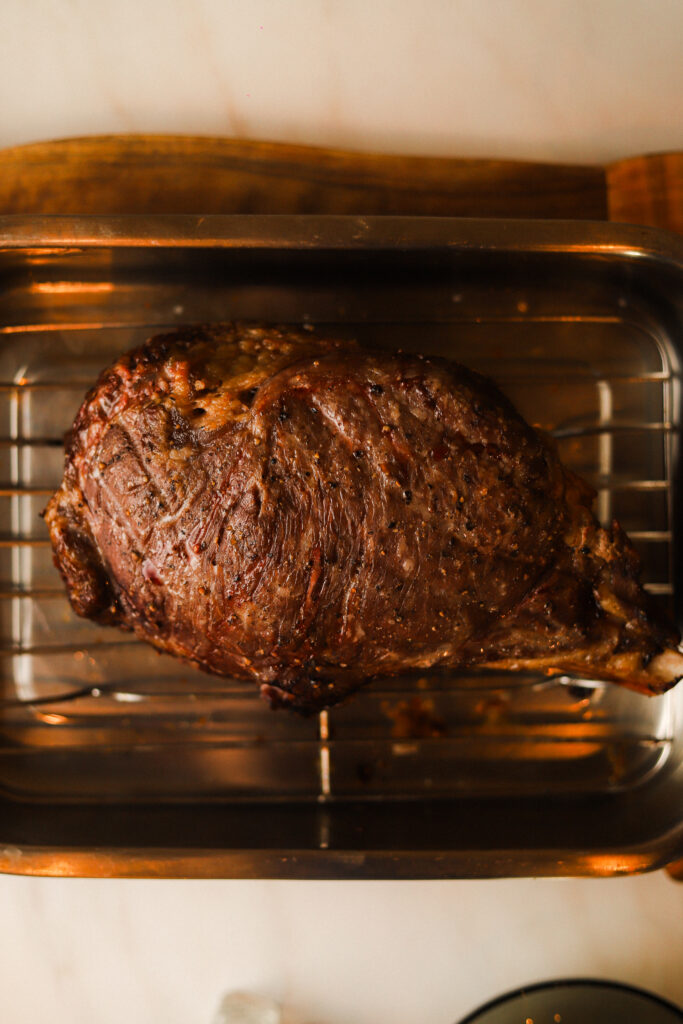
# There’s nothing quite as captivating as a slowly roasted and richly crusted prime rib sitting prominently at the center of a dinner table.
Prime rib may be the ultimate cut of beef. It offers a little bit of everything for everyone. Bold, well-marbled fatty bites for those who believe fat equals flavor. Tender, rosy sections for fans of filet or tenderloin. Hearty beefiness for the ribeye aficionados. And finally, a robust dark crust for those eager to mention *Maillard reaction* in any beef-related discussion.
## What is prime rib
Prime rib is among the largest beef cuts available to the typical home cook. You purchase it as a roast comprising a full rack of 7 ribs, usually referred to as ribs #6-#12. A prime rib can be likened to an exceptionally high-quality tomahawk or bone-in ribeye, extended to about a foot in thickness. Indeed, the meat in a prime rib roast is the same that becomes ribeyes and tomahawks.
## How to cook prime rib
Follow these steps to achieve a flawless prime rib every time:
1. Preheat your oven to 450ºF.
2. Brown both sides in a cast iron skillet: this is optional but highly advisable, particularly for smaller roasts that are easier to manage. The smoke alarm might go off.
3. Coat with butter or oil, then sear in the oven at 450ºF for 15 minutes.
4. Adjust the oven to 200ºF and crack the oven door for about 15 minutes, or until the oven temperature drops to 200ºF with an oven thermometer. The smoke detector may go off again.
5. Roast for 20 minutes per pound for medium rare, or until your meat thermometer alerts you. Refer to temperatures below.
6. Allow to rest for 30 minutes, then slice and savor!
## Prime rib temperatures
Prime rib, like any roast, continues to cook after being taken out of the oven as the residual thermal energy redistributes. Typically, this results in a rise of about 6 degrees, though your specific outcomes may differ depending on your home’s warmth. In general, 6 degrees is a sound estimate, so you should remove your roast 6 degrees shy of your desired temperature. For quick reference, my target temperatures are listed below.
– Rare: 125ºF – take out at 119ºF
– Medium-rare: 130ºF – take out at 124ºF
– Medium: 135ºF – take out at 129ºF
– Medium-well: 140ºF – take out at 134ºF
– Well done: 🥵
## Prime rib cooking time
If you’re cooking for a ravenous crowd and need guidance on timing a large roast for dinner, there’s a straightforward formula based on your preferred doneness. This is not one of those unrealistic pro-chef speed formulas; it allows for some flexibility in timing, so you can rely on it even while relaxing, enjoying a glass of wine, and occasionally checking your phone for the next cooking phase. That said, using a meat thermometer is crucial. Also, plan on providing appetizers and drinks for anyone particularly hungry before the main dish is served.
The formula is simple – consider:
– 2 hours for tempering
– 30 minutes for searing
– 15-30 minutes per pound (in 5-minute increments – medium rare is 20 minutes per pound)
– 30-minute resting period
The prime rib we prepared weighed about 6 lbs, which indicates a 2-hour cooking time plus an additional 3 hours for the various tasks. It took a total of 5 hours from taking it out of the fridge to the first bite.
## The importance of a meat thermometer
A meat thermometer is crucial. That old adage about judging doneness by touch? Not suitable for essential cuts of meat, in my view. I suggest using an oven probe; one that beeps when the desired temperature is reached. They can range from very inexpensive to extremely costly wireless app-driven models or anything in between. If you possess an instant-read or thermocouple type, be sure to check frequently to prevent overcooking the roast.
## Trimming
The amount of fat you should trim depends on your affection for fat. If you remove all the fat from the edges, you’ll achieve a more exceptional sear, but that fat is incredibly flavorful and tender – not at all like the tough, chewy fat you might find in lower-quality cuts. My butcher left the fat cap on the spinalis.