**Discovering Pesto Variations: Beyond Pine Nuts**
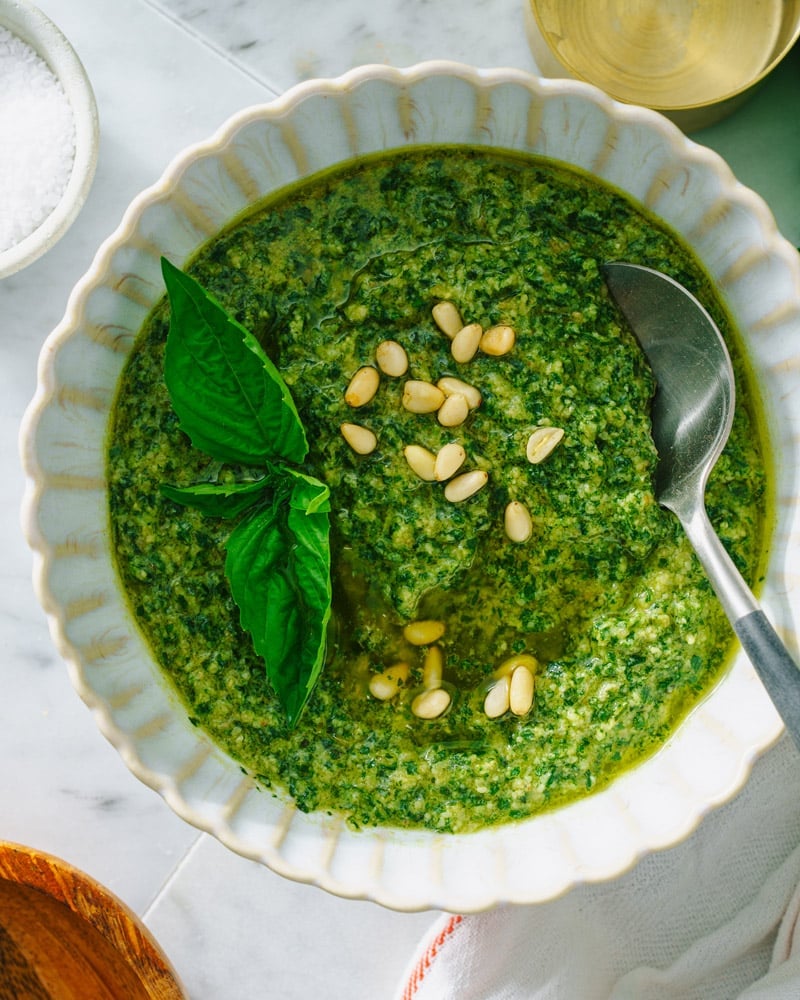
Pesto, the vibrant green sauce hailing from Genoa, Italy, is a cherished mainstay in numerous kitchens. Typically crafted with fresh basil, garlic, Parmesan cheese, olive oil, and pine nuts, pesto’s robust flavor and adaptability render it a favorite for pasta, sandwiches, and more. However, the price of pine nuts can be a deterrent, leading many home cooks to seek alternative ingredients that provide both taste and cost-effectiveness.
**Pine Nuts: A Classic Option**
Pine nuts, the edible seeds of pine trees, possess a subtle, buttery flavor that complements the other components in pesto. In spite of their widespread use, pine nuts are frequently pricey due to the labor-intensive harvesting process and their limited supply. This has prompted many to search for more affordable alternatives that maintain flavor integrity.
**Cashews: A Creamy Substitute**
Cashews serve as a favored replacement for pine nuts in pesto. Their creamy texture and gentle flavor mix effortlessly with basil and garlic, yielding a smooth consistency. Cashews are generally more budget-friendly and easier to find, making them a sensible option for those who make pesto often. Furthermore, their natural sweetness can elevate the overall flavor profile of the sauce.
**Walnuts: A Nutty Variation**
Walnuts provide another outstanding alternative to pine nuts. With their strong, earthy flavor, walnuts impart a distinct twist to classic pesto. They are abundant in omega-3 fatty acids and contribute a slightly different texture, which can appeal to individuals seeking a more substantial sauce. Walnuts are also often more cost-efficient and can typically be purchased in bulk, adding convenience for home chefs.
**The Craft of Pesto Preparation: Mortar and Pestle Technique**
While contemporary tools like food processors have simplified pesto preparation, purists often opt for a mortar and pestle. This traditional method offers enhanced control over the pesto’s texture and flavor. By slowly incorporating basil leaves and grinding them against the mortar’s sides, the essential oils are released, resulting in a more fragrant and flavorful sauce. Although this approach requires more time, it can be a fulfilling experience for those who value the art of cooking.
**Conclusion**
Whether you opt to remain with classic pine nuts or venture into using cashews and walnuts, pesto continues to be a flexible and delightful addition to any dish. By experimenting with various nut choices and preparation techniques, you can customize this timeless sauce to fit your taste preferences and budget. Embrace the innovation associated with pesto-making, and relish the vibrant flavors it adds to your culinary endeavors.